
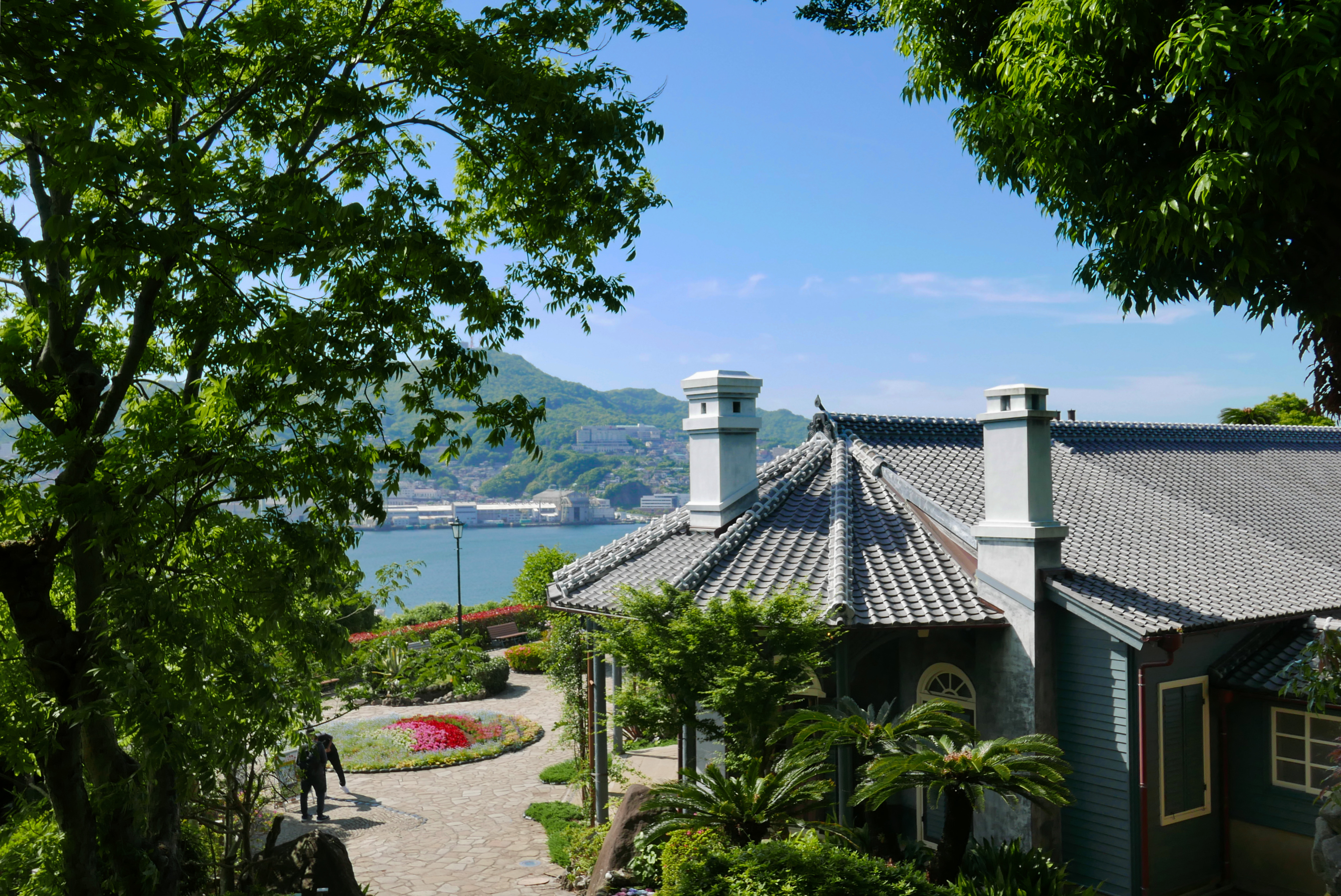
Though its name is unfortunately synonymous with the atomic catastrophe of 1945, Nagasaki today presents itself as a vibrant port town, full of diverse charm. After all, this city has always been the gateway to Japan, where foreign influences mix with local culture.
Nagasaki – a city whose name is often associated with the world’s second nuclear attack by the Americans during WWII – welcomed me with a gloomy sky. It quickly turned into a downpour, and raindrops ran down the train’s window like tears rolling down the cheeks. The atomic tragedy was undeniably etched on my mind and overshadowed anything else. Yet I soon realised that this sad past is just a chapter in the profound history of Nagasaki.
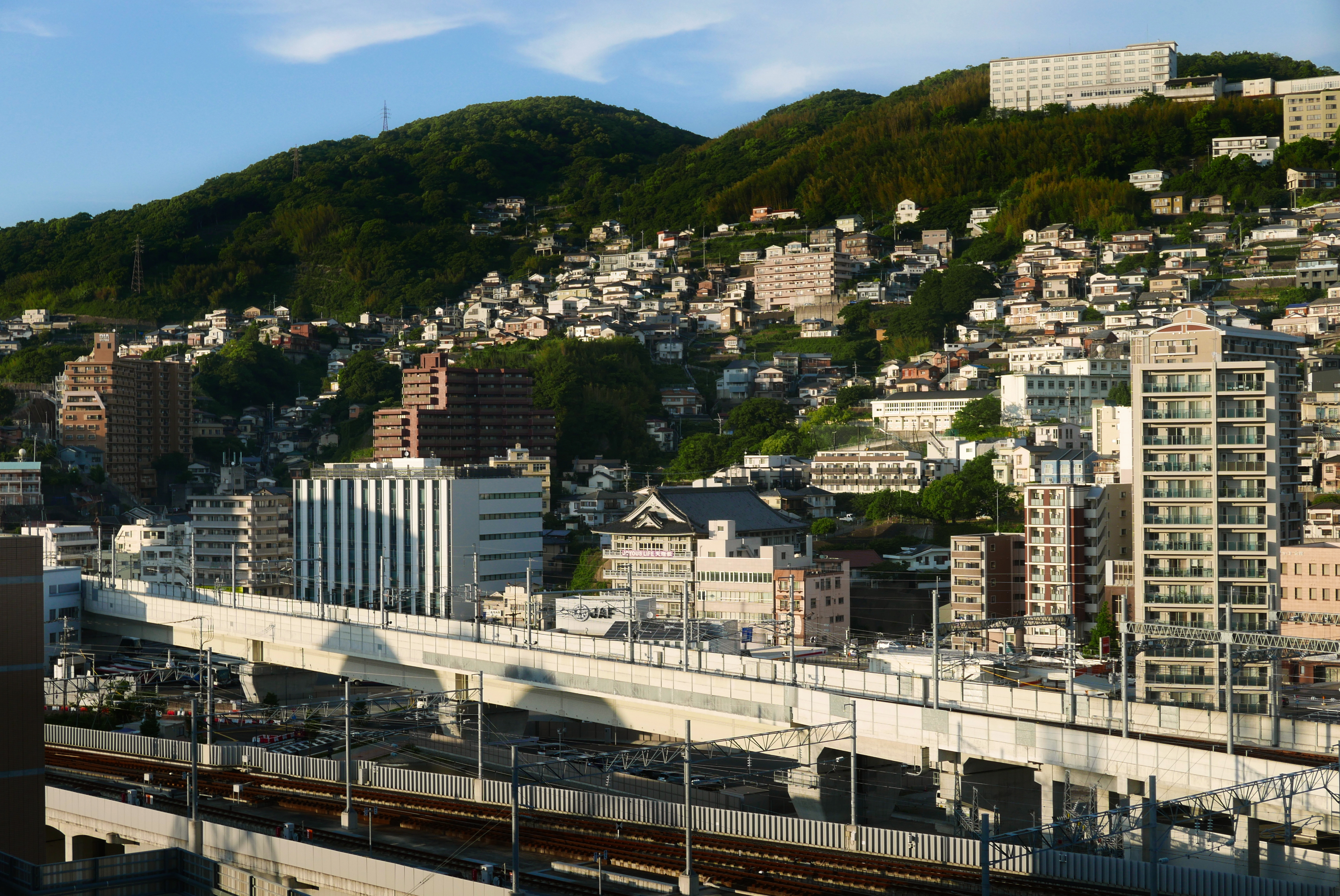
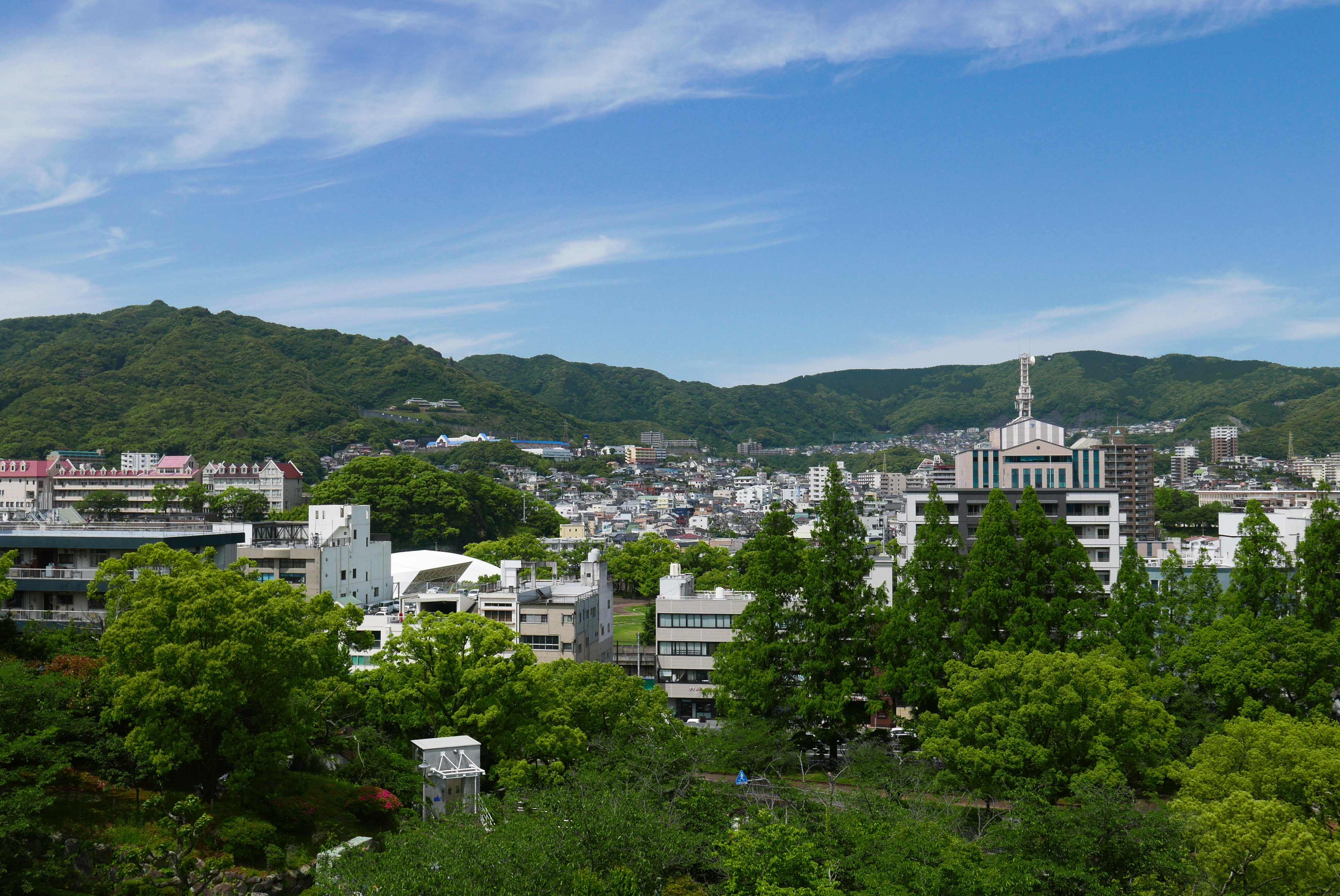
The next morning, Nagasaki revealed its true identity: a vibrant port city arranged like an amphitheatre, with its crooked streets and tiered houses clinging to hillsides that enclose an inner bay. The city is located in the northwest of Kyushu and closer to the Asian mainland than Tokyo. For this reason, Nagasaki has long been a nexus of commercial trade and cultural exchange. Merchants from China, artisans from the Korean Peninsula, priests from Portugal, and traders from the Netherlands all came here, giving rise to a unique cultural mix reflected throughout the town.
Brief History of Nagasaki
Nagasaki’s history dates back to the mid-16th century, when Portuguese traders arrived, bringing firearms and commodities from the West. Thanks to these exclusive imports, the small village at the mouth of the Urakami River quickly evolved into a prominent port town in East Asia. Christianity also flourished in Nagasaki, with a significant portion of the population converting to the new religion, including the daimyo class or feudal lords. The encroachment of the new faith, however, caused unease among the ruling Tokugawa Shogunate. And as tension gripped, they started tearing down churches, persecuting local Christians, and finally steering Japan in the direction of national isolation for 200 years. Although the rest of Japan was closed to Westerners, Nagasaki prevailed as the sole official entry point for European goods.
A port town with a troubled history.
By the mid-19th century, America and its allies began sending warships to Japan, forcing the shogunate to lift the ban on foreign trade and restore diplomatic relations. Nagasaki, alongside Hakodate in the north and Yokohama in the east of Japan, became a treaty port – fully opened for commerce and settlements. The city underwent rapid modernization during the Meiji Restoration, becoming a hub of heavy industry and shipbuilding. Paradoxically, this made Nagasaki the prime target for the US army’s second nuclear attack on the 9th of August 1945, only three days after Hiroshima. The entire city was destroyed, with tens of thousands of people being instantly killed.
Nagasaki was rebuilt after the war, albeit slowly. Its primary industries, including shipbuilding, fisheries, and foreign trade, remain sources of income and are based on its large shipyards. Yet other sectors, such as tourism, have also become increasingly important. These days, Nagasaki invites visitors to explore far beyond the bomb museum and memorial, to see a compelling port town full of diverse charm: from the lively and colorful Chinatown, the restored Western-style residences at Dejima and Glover Garden, to the highly symbolic and beautiful Oura Cathedral.



1. Dejima
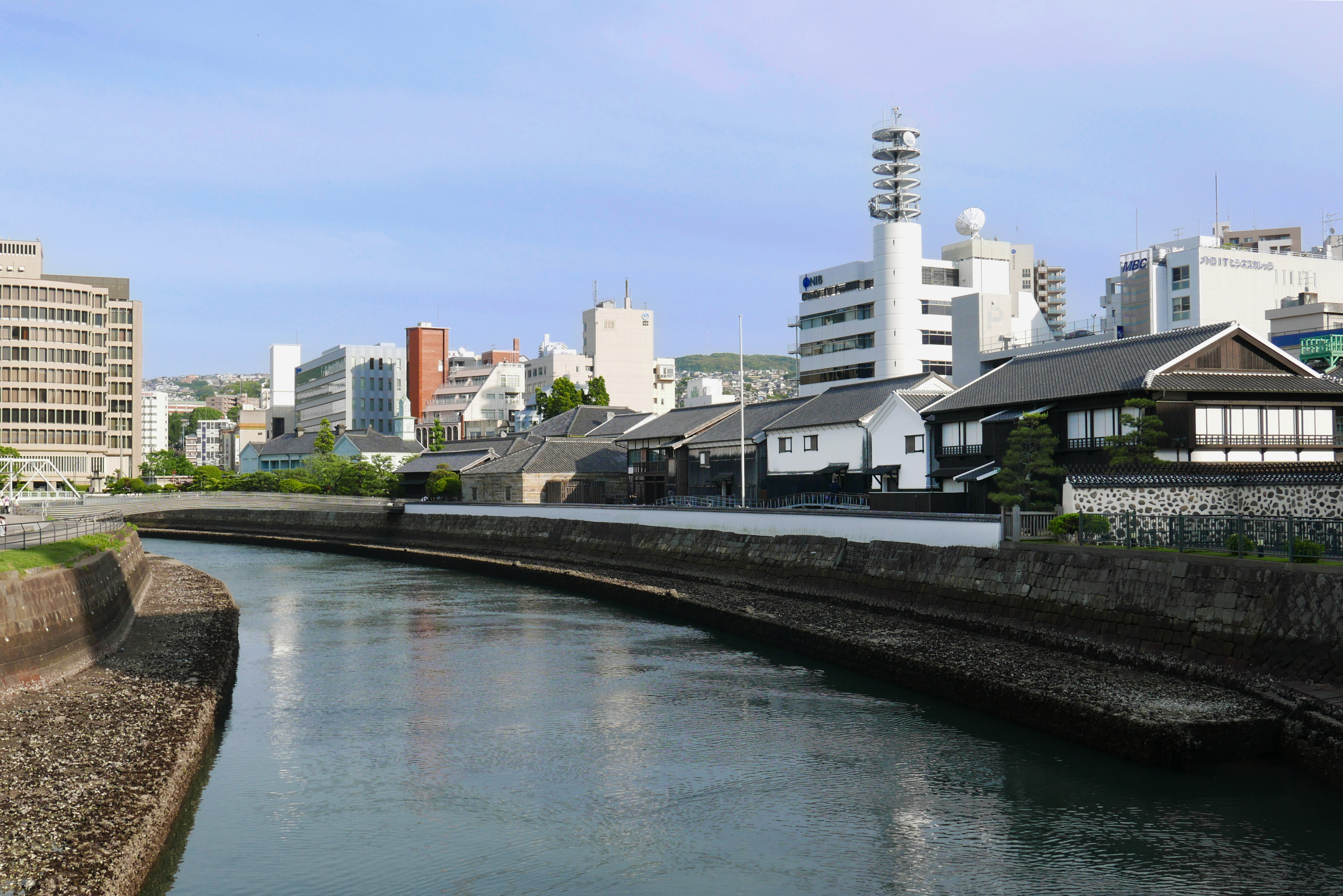
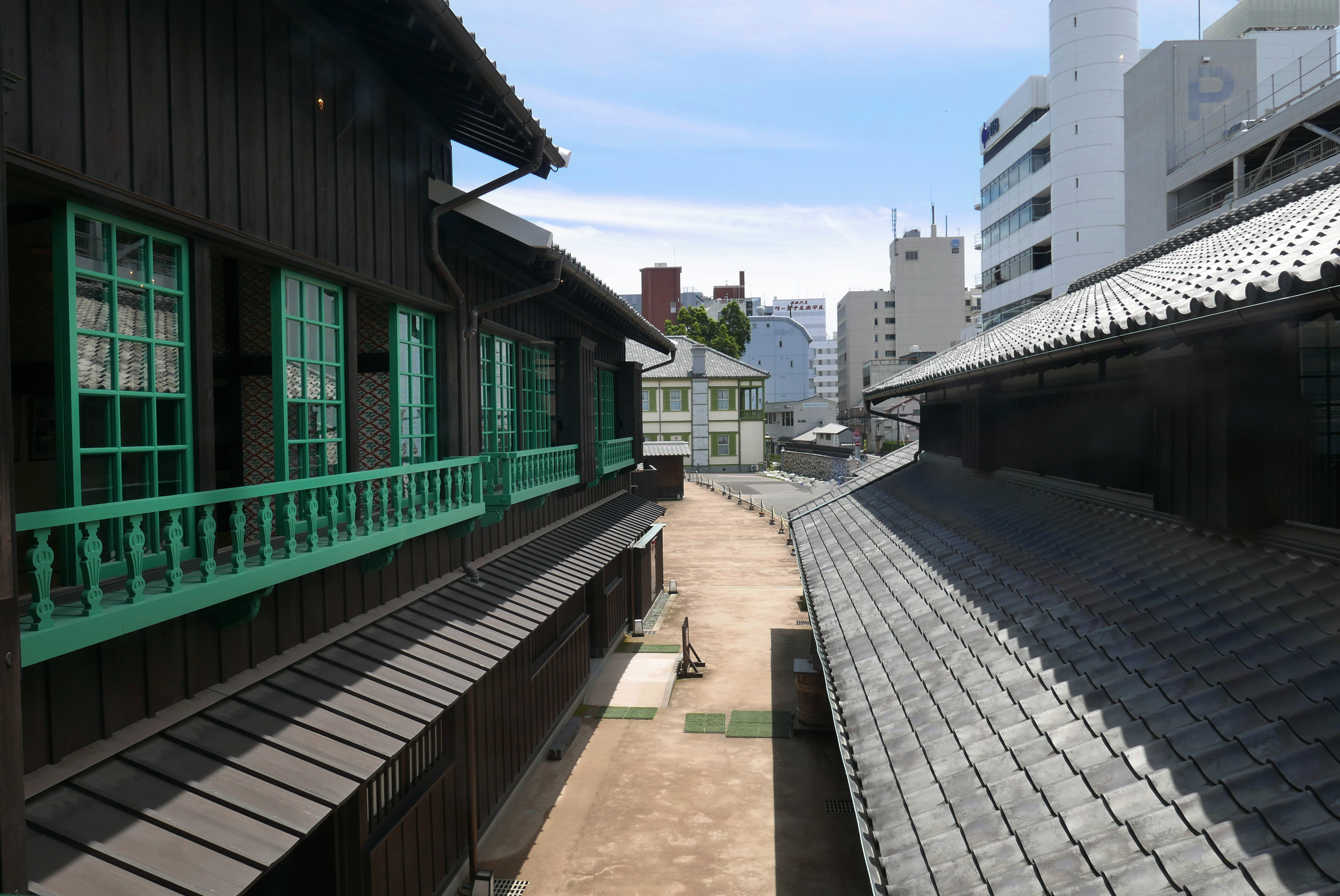
During the period of national seclusion (1639 – 1853), Nagasaki was considered Japan’s only window for European merchandise. But not the whole city was opened for foreign trade, except for Dejima, a fan-shaped artificial island created in 1636. The initial purpose of Dejima was to segregate Portuguese missionaries from the Japanese population. Yet after the shogunate exiled all the Portuguese, the island became an enclave of Dutch traders.
Despite strict control, the Dutch merchants benefited handsomely from this monopoly, as only they could import and export goods from Japan. The island functioned like an enterprise in trade and shipping, as well as a showroom brimming with information and exotic curiosities from the Western world.
The sole link between the West and Japan.
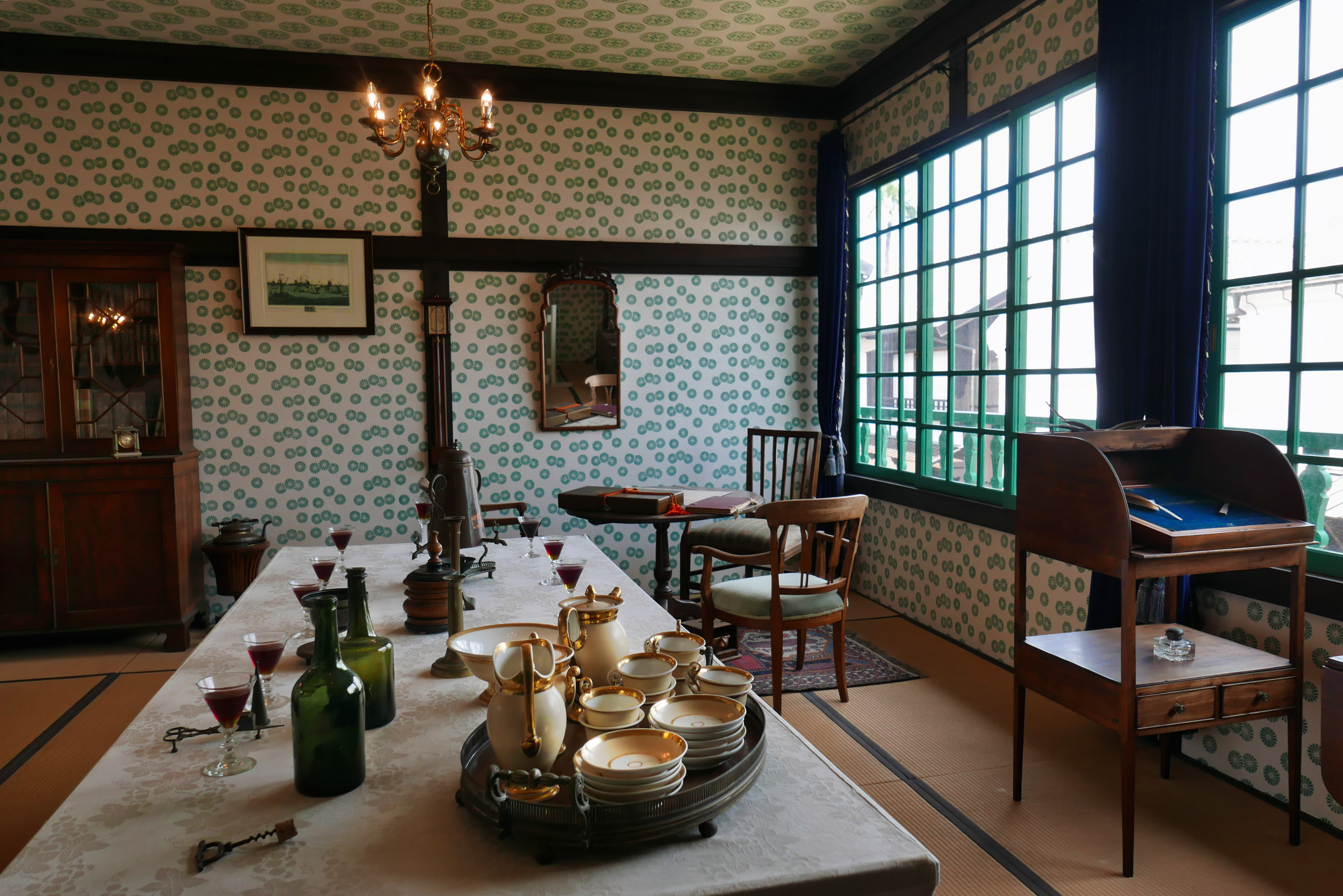
These days, Dejima serves as a reminder of the age of isolation, with more than a dozen structures that are period-accurately reconstructed, including the chief’s residence, warehouses, walls, gates, and the main bridge. Interestingly, Dutch elements are integrated into these Edo-style buildings, reflected in the glass windows, balustrades, and staircases. Inside, furniture and decor are also meticulously recreated.


2. Glover Garden
The opening of the treaty ports and later the Meiji Restoration in the second half of the 19th century led to an influx of Western investors and businessmen to Nagasaki. Many settled on the hillslope with views across Nagasaki Bay and started building distinctive Western-style residences. Among them, the Glover Garden is considered the oldest and best-preserved.
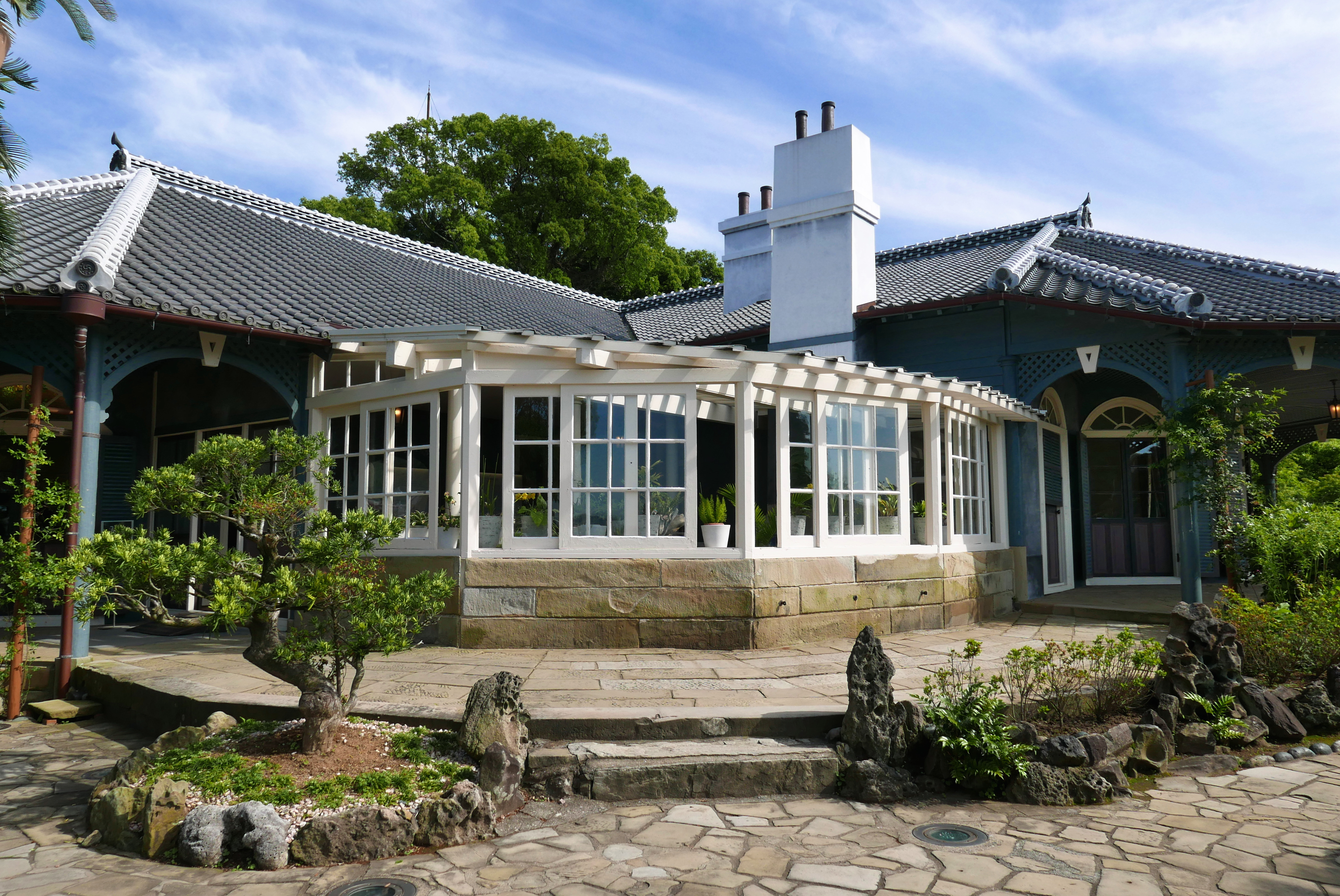
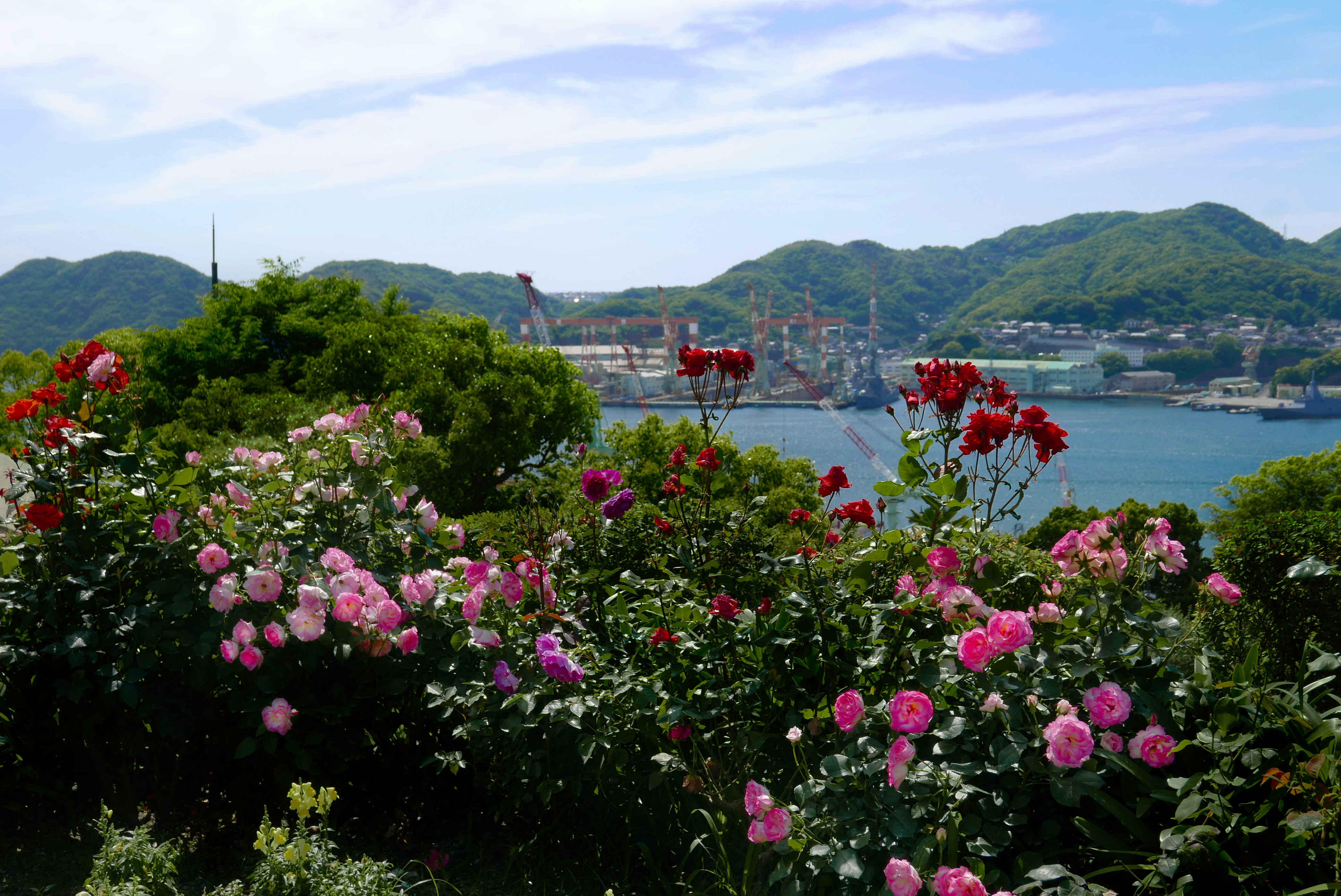
Overlooking the harbor and the shipyard (recognized by its giant cranes), the Glover Garden is the former home of Thomas Glover, a Scottish merchant who played a crucial role in modernizing Japan across various industries, including shipbuilding and coal mining. It was erected in 1863 and features a single-storey bungalow house surrounded by magnificent flower beds. The house itself is a unique fusion of traditional Japanese and Western architecture. For instance, the clay walls and grey ceramic tiles adorned with demon heads to ward off evil spirits are definitely Japanese elements. Meanwhile, foreign influences are reflected in the elaborate interior, chimneys, lattice arches, French windows, and stone-floored verandas.
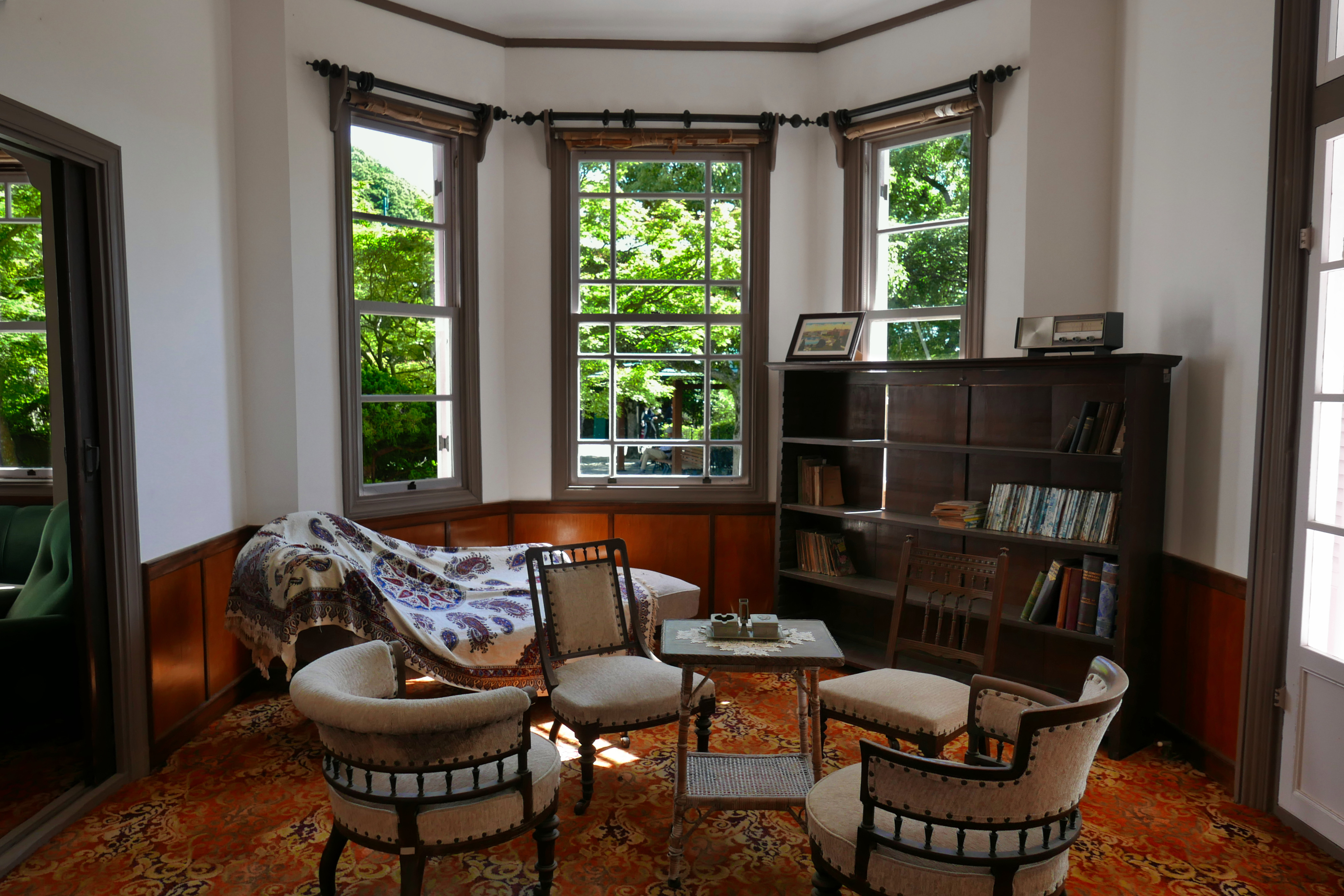
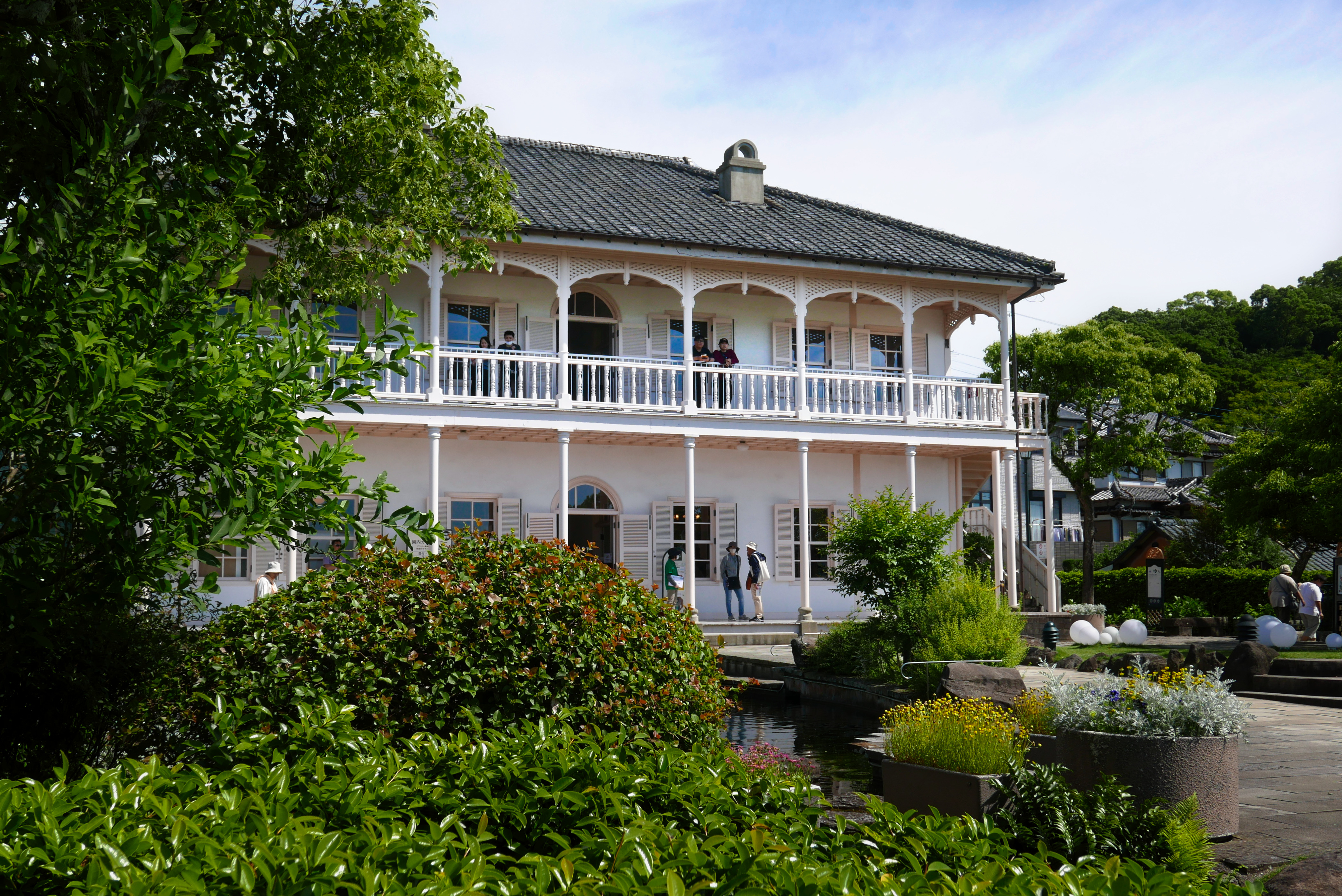
Aside from the Glover Residence, eight more Meiji-period structures belonging to the city’s former foreign residents were dismantled and relocated here. They also share the same style as the Glover Residence, which means blending Japanese features into foreign architecture. Through the well-preserved rooms, these opulent mansions offer visitors a chance to experience the lifestyle of wealthy expatriates in Nagasaki in the late 19th century.
A unique blend of traditional Japanese elements and Western architecture.


3. Oura Cathedral
Soon after the ban on foreigners was lifted in the mid-19th century, Christianity once again became legal in Japan. Churches were re-established, with the first being Oura Cathedral. Standing atop a hill flanked by towering palm trees, this wooden church was erected in 1864 to commemorate Japan’s first martyrs. It has a traditional Gothic style, featuring a rib-vaulted ceiling, arched windows, and an octagonal spire. Curiously, a plaque bearing the church’s name in gilded Chinese characters is displayed on the white stucco facade. It was undoubtedly an effort to signal its presence to any Christians remaining in the Japanese population.
A symbol of hope and resilience.
This effort had paid off. Less than two years after the cathedral’s construction, Kakure Krishitan, or the hidden Japanese Christians, began to emerge. They met with the priest of Oura Cathedral, and it was the first time the Catholic Church became aware of these mysterious believers. These people, as well as their predecessors, had gone into hiding across Nagasaki for 250 years. They practiced their faith in complete secrecy, for instance, by disguising the image of Mary as the Kannon, the Buddhist deity of Compassion, by reciting prayers in closets, or by falsely registering as parishioners of a Buddhist temple.
A magnificent white marble statue of the Virgin Mary was acquired to mark this extraordinary discovery. It was imported from France and paid for by donations from Urakami faithful. The statue, together with the Oura Cathedral, represents the hope and resilience of the hidden Japanese Christians. It also signifies the end of a long chapter of religious oppression in Japan.
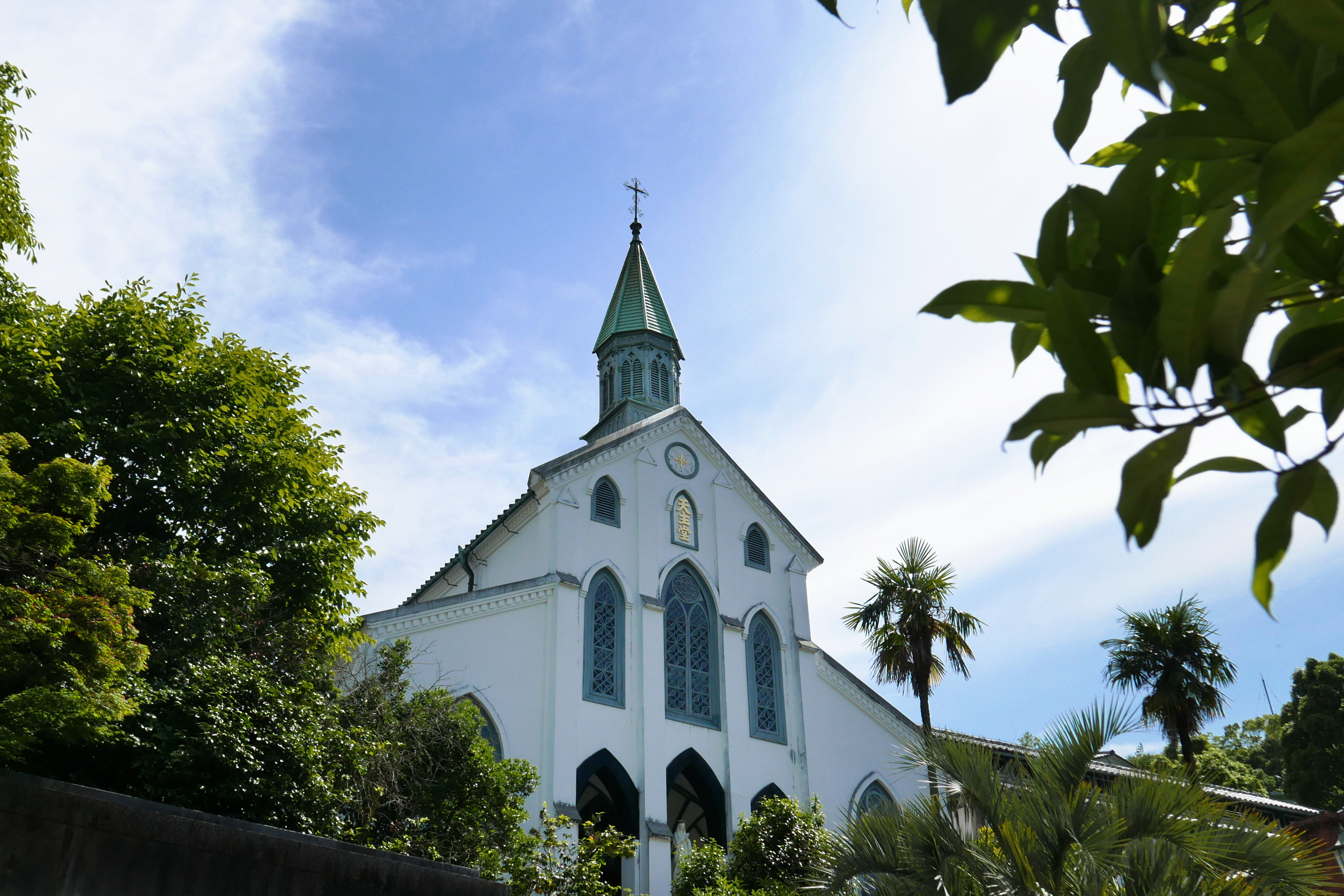


Tips: The entrance fee to the Oura Cathedral is quite steep: ¥1,000. If you intend to take a shot of the cathedral, you can do it from the entrance. Photography is prohibited inside the church. Although not as beautiful as the cathedral itself, the nearby Christian Museum is a great place to learn more about the background and the struggles of hidden Christians in Nagasaki.
4. Atomic Bomb Museum
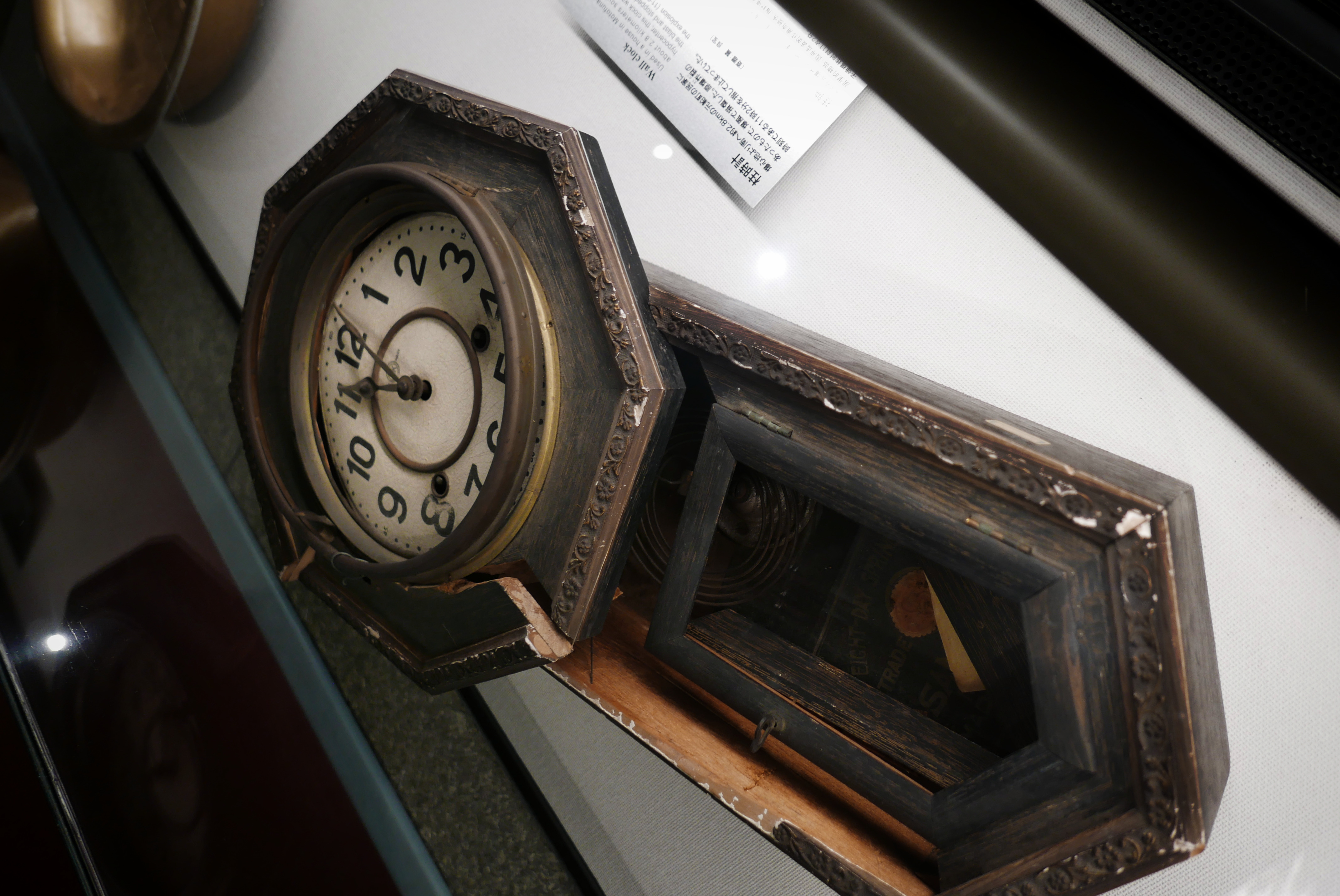
At 11:02 on the morning of August 9, 1945, Nagasaki, Japan’s center of heavy industry and shipbuilding, was attacked by the US army. It was the second atomic bomb that had ever been used in global warfare history, killing about 75,000 people at the time of detonation. Thousands more died due to burns, injuries, or radiation exposure in the ensuing years. Even those who managed to survive were left with trauma and permanent scars. The entire port city was ruined, with more than forty percent of buildings destroyed or severely damaged.
All these agonies and the gravity of the attack are recounted in the Nagasaki Atomic Bomb constructed in 1996. The sombre yet essential museum was built as a reminder of that fateful day, displaying portraits, items, and testimonies of the victims. There is also information about the rescue efforts, the historical background that led to the nuclear attack, as well as the plutonium bomb itself.
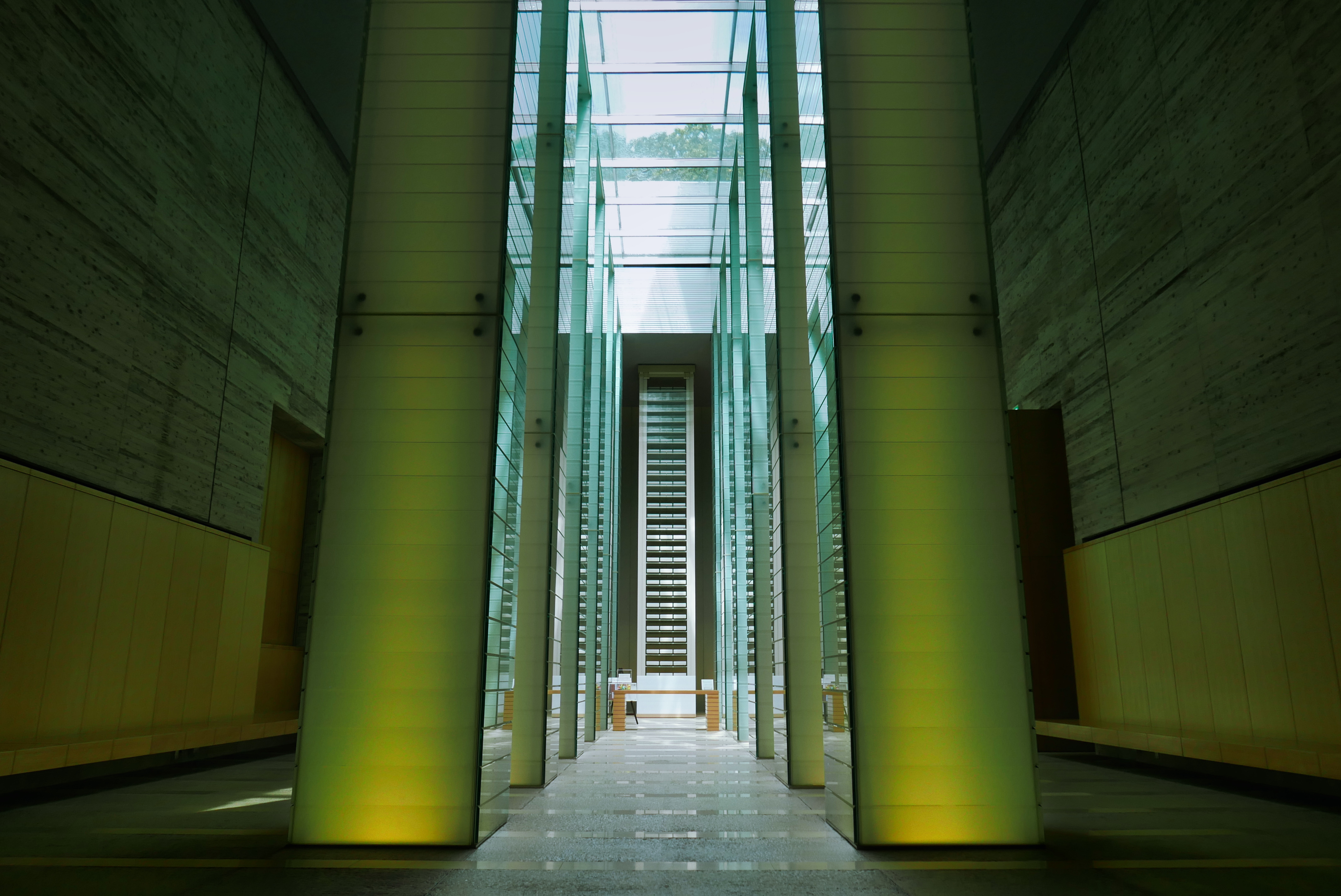
Another important component of the museum is the Memorial Hall – a facility to mourn the deceased and to pray for peace. It consists of twelve glass pillars with shelves that hold the victim’s name. The pillars stand solemnly in parallel, forming a line that leads to the bomb’s hypocenter. Atop the hall is a sculpted basin that holds the water that the nuclear attack’s victims desperately desired. It’s illuminated at night by around 70,000 optical fibers, bewailing those sad fates.
A reminder of that fateful day.



Tips for Visiting Nagasaki
- All sights mentioned above are accessible by tram and on foot. Take tram line 1 to reach the Atomic Bomb Museum and Dejima. From Dejima, you can either walk or take the tram line 5 to the Glover Garden and Oura Cathedral.
- For a panoramic view of Nagasaki City and its surrounding landscape, head to Mt. Inasa (333 meters) using the ropeway from Fuchi Jinja Station. A round-trip ticket costs ¥1,250.


This is such an amazing travel guide with so many beautiful photos – you certainly captured the city’s essence. It looks like a wonderful place to explore, especially as it seems to offer a more intimate, scenic, and “vibe-y” experience compared to larger Japanese cities. Thanks for sharing, and have a good day 🙂 Aiva xx
Thanks for the kind words, Aiva 🙂
You are right, the vibe in Nagasaki is very different from other cities. The food scene is also unique, with many dishes influenced by foreign cuisine. I’ve only tried the Castella (influenced by the Portuguese) and the pork-belly bun (influenced by the Taiwanese). They are both delicious. Need to return for more 😛
Your posts are always top stuff! Lovely photos and descriptions! Ill have to visit here whenever i get back to Japan!
Highly recommended! The vibe is totally different from the traditional destinations like Kyoto. I’m glad that you like the post, Anna 😀
I always think of Kyushu as where I need to go in Japan the next time I visit the country, and among all the places on the island, Nagasaki is undoubtedly high on my wish list. I’ve heard and read good reviews about the city. One of my colleagues even went twice because he loved it so much. Thanks for these beautiful photos of this fascinating corner of Japan!
I also want to go back as well 😛 There are certain dishes that I need to try. For example, the Nagasaki-style kaiseki. I forgot the name, but it’s a mix-up between Chinese, Portuguese and Japanese cuisine.